
Midnight sun: summer with the lid off
For ten weeks the sun forgets to set over Arctic Norway. The world stays gold from ten till two, trailheads are empty at midnight, and “one more hour” becomes the whole holiday. Bring an eye mask; you won’t use it.
What it’s really like
Above the Arctic Circle in June, sunset and sunrise merge into one long amber event that lasts from dinner until breakfast. Your body clock gives up somewhere on day two — in the best possible way. You’ll eat at ten, summit at midnight, swim (briefly, heroically) at one, and sleep like a child behind blackout curtains you’ll forget to close.
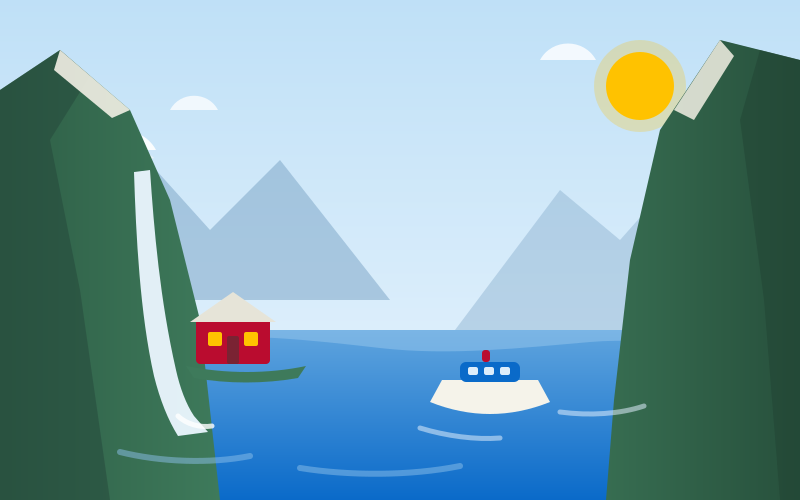
Lofoten is the stage set: shark-fin peaks straight out of the sea, fishing villages in Falu red, white-sand beaches that look borrowed from the Caribbean and water that confirms they are not. We put you in rorbu cabins on the waterline, where the gulls commute past your window and the drying racks smell faintly, honestly, of history.
The trick to the season is doing things at the wrong time on purpose. The famous hikes are conga lines at 2 p.m. and cathedral-empty at 11 p.m. Kayaks launch after dinner. Photographers get a golden hour that lasts four. This is the itinerary we actually build — inverted, unhurried, lit like a film.
Best window
Best months: may to july

Pack a proper eye mask and use it after the second night — the sun is a wonderful host and a terrible roommate. Your future self, at breakfast, says thanks.
Moments this collection is built around
The midnight summit
Reinebringen at 00:15: the village grid below, the sun skimming the sea, and nobody else on the ridge.
After-dinner paddle
Glass water through sleeping harbours — the only wake is yours, and it’s golden.
The four-hour golden hour
Photographers cry a little. Everyone else just takes their best pictures ever.
The bases we build around
 Lofoten
Reine, Lofoten
The poster village — rorbu cabins, sea eagles, and the stairway hike above the fjord.
 Base
BaseHenningsvær
Art galleries, climbing culture and the world’s most photographed football pitch.
BaseSenja
Lofoten’s quieter sibling — same drama, half the cars, twice the moose.
How a typical day runs
Wake late, waffle hard — the day has no deadline
Beach or boat: white sand at Haukland, or a sea-eagle safari
Long dinner — stockfish, skrei or a harbour-side burger, no rush
Boots on: the “evening” hike starts when the light turns to honey
Summit, sun still up. Photos, chocolate, disbelief. Bed by two-ish, maybe.
The practical bit
| Ideal length | 5 – 7 nights; add Senja for 9 |
| Season window | Mid-May to late July (sun literally never sets) |
| Typical weather | 8 – 18°C; Arctic summer is bright, brisk and changeable |
| Activity level | Moderate — the best viewpoints are earned; easy versions always exist |
| Great for | Hikers, photographers, groups of friends, sleep anarchists |
| Included | Rorbu stays, guided night hikes, kayak sessions, island transfers |
Make it yours
This page is the collection — your trip is the remix. Tell Lief your dates, your people and your pace, and get a draft itinerary in about a minute. Free to use, refined by our Oslo experts before you pay a cent.
Most guests blend this with…
 Year-round · best May–Sep
Fjord voyages
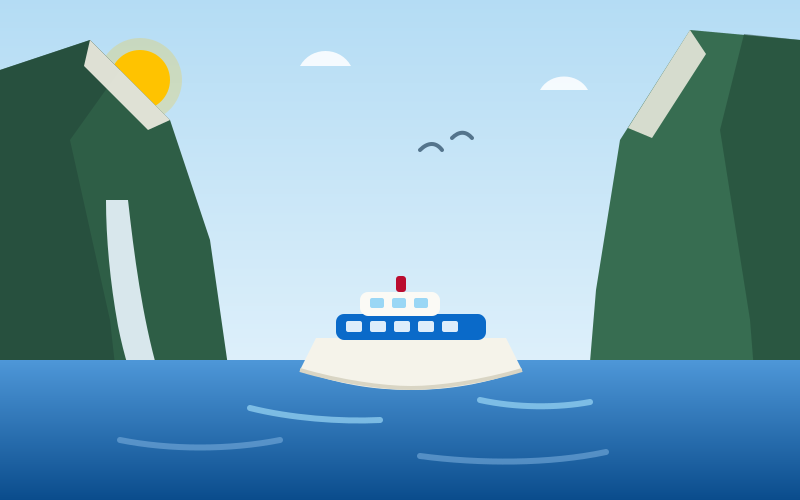
Kilometre-high walls, waterfalls in stereo and villages that cling like barnacles. Cruise Nærøyfjord on silent electric boats, kayak Geiranger at dawn, or ride the coastal steamer north past a thousand islands.
 Seasonal peaks
Arctic wildlife
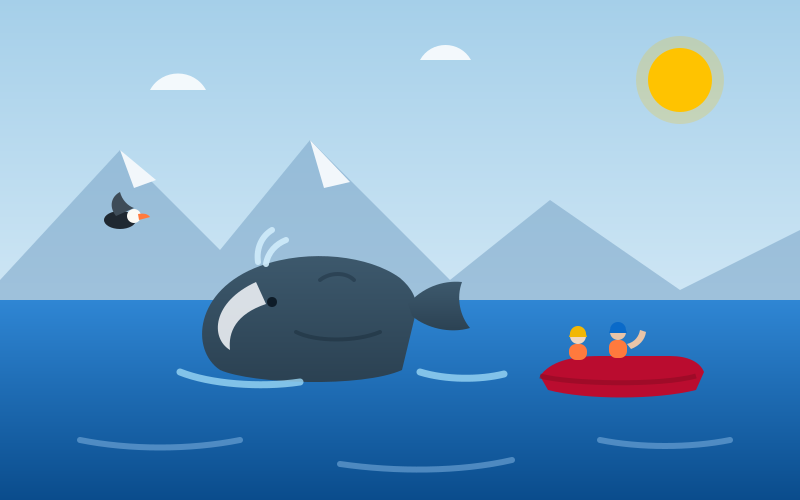
Orcas herding herring in winter fjords, humpbacks off Reykjavík, ten million puffins, sea eagles the size of doors and reindeer with right-of-way. Small boats, respectful distances, guides who know the animals by name (almost).
Turn this feeling into dates
Free AI draft in a minute, refined and booked by our Oslo team — with 24/7 support while you travel.