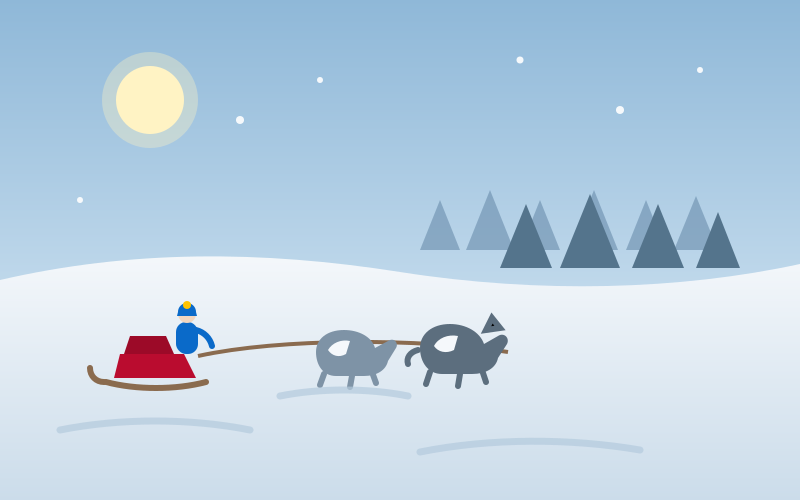
Nobody remembers the cold from a well-dressed trip — they remember huskies, green skies and how good hot berry juice tastes at −15°C. Cold is a packing problem, and packing problems have solutions. Here is ours, refined by guides who spend forty nights a winter outdoors.
The three-layer system
- Base layer — merino wool. Top and leggings, worn next to skin. Merino stays warm when damp and doesn’t smell on day four. Cotton is banned; it holds sweat and turns into a cold compress.
- Mid layer — trap the heat. Fleece or a light down/synthetic jacket. Two thin mids beat one thick one: you’ll strip a layer the moment you start snowshoeing.
- Shell — block the wind. Windproof, water-resistant jacket and trousers. Wind is the real thief; −10°C in still air feels kinder than −2°C in a gale.
City days: base + mid + shell. Aurora nights and sled days: add the borrowed thermal overall on top — every good operator (us included) lends them.
The checklist
| Category | Pack | Notes |
|---|---|---|
| Base | 2× merino tops, 2× merino leggings | 150–200 g/m² weight |
| Mid | 1 fleece + 1 light down jacket | Wear both on aurora nights |
| Shell | Windproof jacket & trousers | Roomy enough for layers under |
| Feet | 4× wool socks, insulated waterproof boots | One size up — air = warmth |
| Hands | Thin liner gloves + big mittens | Liners stay on for photos |
| Head | Wool beanie + buff/scarf | Buff doubles as face shield |
| Extras | Swimwear, sunglasses, lip balm, moisturiser | Sauna is non-negotiable; snow glare is real |
Feet & hands — where trips are won
Cold feet end evenings early. Boots should be insulated, waterproof and one size larger than usual — the air pocket around a wool sock is the insulation. Two pairs of socks only if the boot still fits loosely. For hands, the liner-plus-mitten combo means you can work a camera for 30 seconds without exposing skin. Chemical hand-warmers cost €2 and feel like cheating in the best way.
Phones, cameras & batteries
Cold murders batteries. Keep the phone in an inside pocket, carry a power bank (also inside), and expect 50% of normal endurance. Camera folk: batteries live warm in pockets, camera stays cold outside — bringing a cold lens into a warm cabin fogs it for an hour. Zip it in a bag first and let it warm slowly.

Swimwear (sauna!), sunglasses (March snow-glare is blinding), lip balm, a headtorch with a red mode for aurora nights — and slip-on ice grips for town pavements. Ask any physio in Tromsø about that last one.
Packing FAQ
Can I rent the serious gear there?
Yes. Thermal overalls, polar boots and mittens come free on most guided activities, and rental shops in Tromsø, Kiruna and Rovaniemi kit you out for independent days.
What about kids?
Same system, more spares. Lapland is superb with children — most operators stock child-size overalls, and sled blankets are plentiful. Pack double gloves; small ones vanish.
One bag or two?
Winter kit is bulky but light. One 60–80 L duffel per person plus a day pack works for every TripNord winter route — trains and transfers are luggage-friendly.