Here is the truth most brochures skip: nobody can promise you the aurora. It is weather — solar weather — and it does not care about your flight times. What you can do is stack the odds so heavily in your favour that missing them becomes the surprise. That is what this guide is about.
When to go
The aurora is up there all year; you just need darkness to see it. That gives a season from early September to early April. Within it, two windows consistently over-deliver:
- September–October: mild nights, open hiking trails, lakes still unfrozen for double-aurora reflections. Equinox months are also statistically stormier — in the good, geomagnetic sense.
- February–March: deep snow for daytime adventures, lengthening days, and again that equinox boost. Our guides’ personal favourite.
| Month | Darkness | Cold (inland) | Verdict |
|---|---|---|---|
| Sep–Oct | Good from ~21:00 | −2 to +8°C | Best all-round entry |
| Nov–Jan | Maximum (polar night) | −10 to −25°C | Most atmospheric, coldest |
| Feb–Mar | Long, improving light | −5 to −18°C | Snow adventures + aurora |
| Apr–Aug | Too bright | — | Chase the midnight sun instead |
Where to go
You want three things: to be under the auroral oval (67–70°N), to have escape routes to clear sky, and to have something wonderful to do in daylight. Our shortlist:
- Tromsø, Norway — the classic. A real city under the oval, with fjords that split the weather: when one side clouds over, guides drive to the other. Whales in the fjords Nov–Jan.
- Abisko, Sweden — the statistician’s pick. Mountains wring the moisture from incoming air, creating a famous “blue hole” of clear sky. The Sky Station sits right in it.
- Finnish Lapland — the romantic’s pick. Glass igloos and aurora cabins mean you watch from a warm bed; husky mornings sweeten the deal.
- Iceland — wildcard weather, wild backdrops. Lower latitude, but lava fields and glacier lagoons under green fire are hard to top.
How to actually see them
- Stay 4+ nights. One-night hopes get cloud-cancelled. Four nights in the zone is where our guest success rate hits 96%.
- Go mobile. A guided chase follows gaps in the cloud, sometimes 150 km worth. Locals read the sky like a bus timetable.
- Watch the data, not just the sky. Apps like NorwayLights and Aurora Forecast show solar activity (Kp) and cloud cover. Kp 2–3 under clear Arctic sky already delivers.
- Kill the light. Ten minutes away from streetlamps doubles what your eyes can see. Red-light head torches preserve night vision.
- Stay out late. Peak activity clusters around 21:00–01:00 local. The lights reward the stubborn.
Photographing the lights
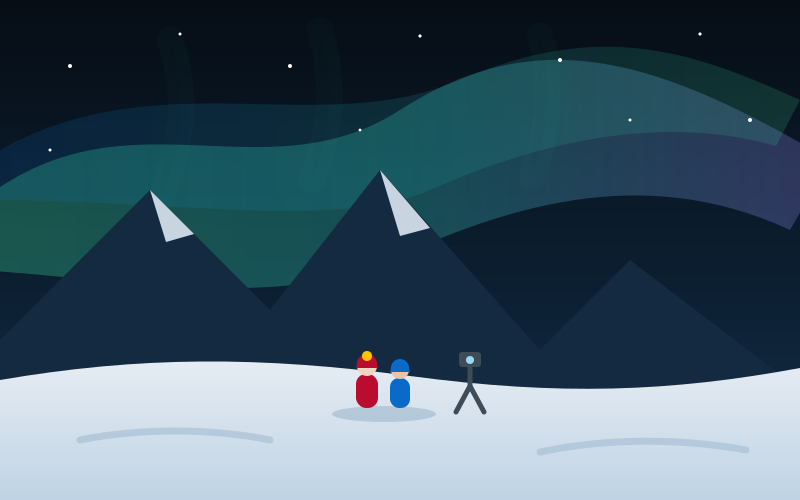
Phones: night mode, 3–10 s exposure, brace on a rock, mitten off for as briefly as possible. Cameras: manual mode, f/1.8–2.8, ISO 1600–3200, 5–15 s, focus set to infinity on a bright star. Take one frame with you in it — future-you says thanks. Then put the camera down for a while; some shows deserve full attention.
What to wear
Aurora watching is standing still in the coldest part of the night — dress two levels warmer than the daytime. Full system in our Nordic winter packing guide; the short version is merino base, real mid-layer, windproof shell, and boots with room for wool socks. Guided chases usually lend polar suits — take them, style is temporary.

Cloudy at your cabin ≠ cloudy everywhere. The nights guests remember forever usually started with “it doesn’t look promising…” and a guide who drove 40 minutes east. Trust the chase.
Aurora FAQ
Can you guarantee a sighting?
No — and run from anyone who does. We stack odds instead: long stays, mobile chases, glass-roof beds. 96% of our 4+ night winter guests see the lights at least once.
Best single month?
March. Equinox activity, deep snow, longer days, slightly softer cold. September is the runner-up for autumn colours and open water reflections.
Are the lights visible from cities?
Strong displays punch through city glow — Tromsø residents see them from bus stops. But ten dark-sky minutes away, a medium display becomes a great one.